Loo York
The nearest restroom you can actually get into. New York City.
Coming soon
iPhone first. An Android version is in testing.
Why I made this
It started as a joke. I had recently released a phone app, Spike Tape, and I asked a friend whether there was an app they wanted me to make. They said a restroom finder. When you gotta go, you gotta go.
We both laughed. Then I thought about it, and it was a real problem. When I first moved to New York, I ran into it myself. I went to the App Store and downloaded one or two restroom apps. Both were maps covered in pins, and that is not what I want when I am in a hurry.
So I decided to try. How do you take a kinda embarrassing emergency and make it easy, maybe even a little fun?
It's not a map
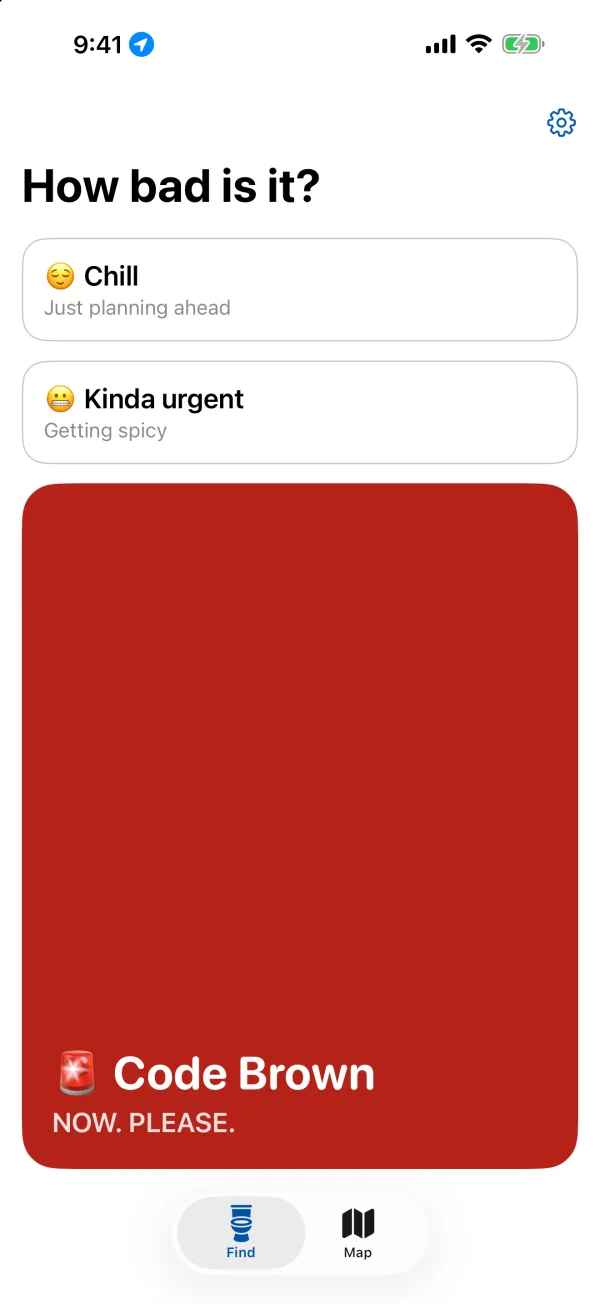
When you are in a hurry, you do not want to browse 30 pins. You want one answer.
So the first screen is one question and three buttons. The 🚨 one is the biggest and the easiest to hit.
| Mode | What it does |
|---|---|
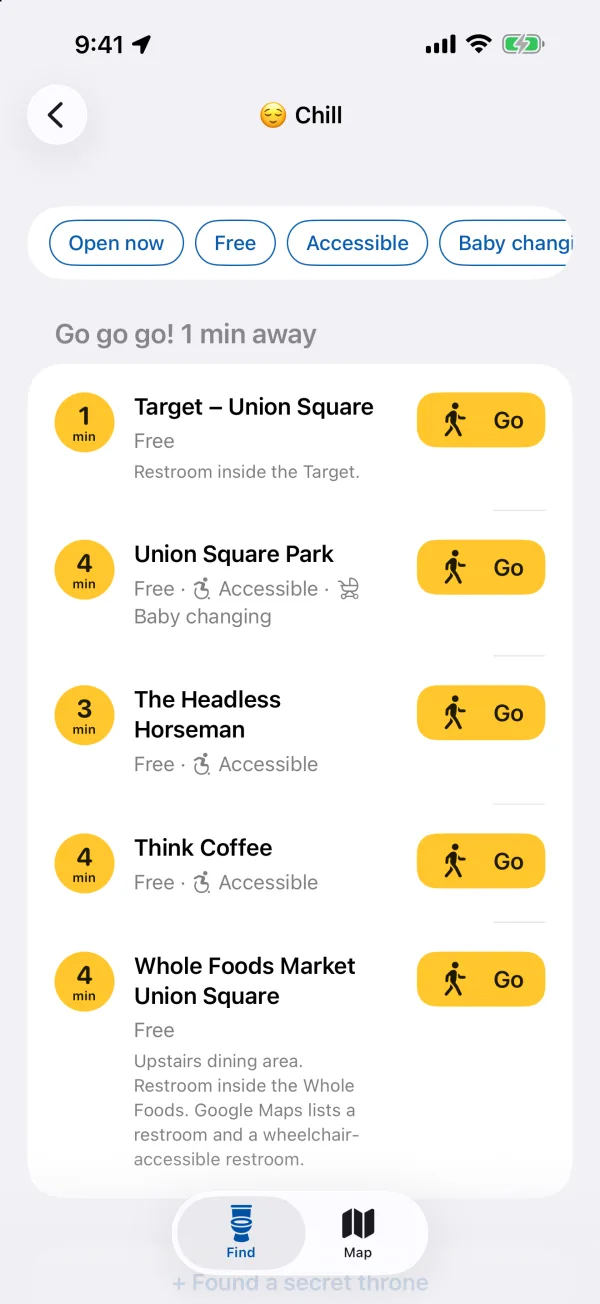
| Chill | A few good options, with tags and amenities. |
| Kinda urgent | The nearest ones that are likely open. |
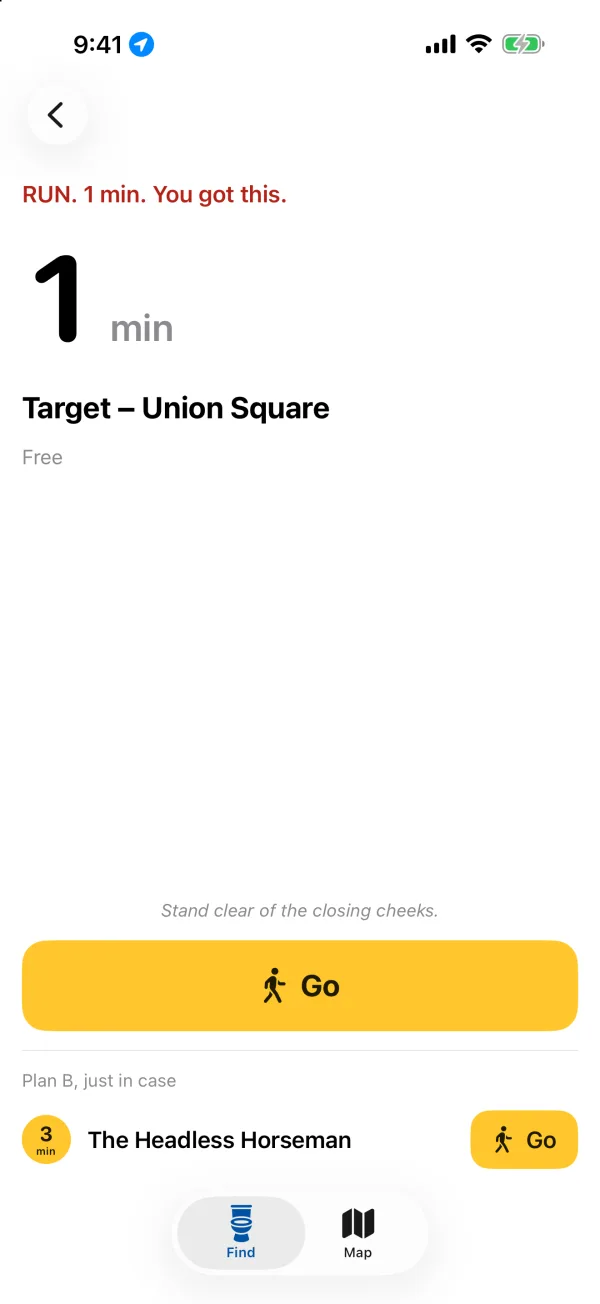
| Code Brown | One restroom and one backup. Only places we're sure are open. No questions asked. |
Choices I made, and why
-
“Confirmed 2 hours ago” matters more than stars.
A 4.2-star rating says nothing about whether the door is locked today. Every place shows when someone last got in.
-
Code Brown only sends you somewhere we're sure is open.
It would rather send you farther than point you at a door that is shut. Places whose hours are uncertain are marked in orange in the other modes, and left out of Code Brown.
-
Code Brown ignores your filters and never asks which maps app to use.
One second matters.
-
Knowing how to get in is data too.
Walk-in, customers only, ask the staff. Google will tell you a café has a restroom, not that you need to buy something first. In New York that is the real problem.
-
Hours follow New York.
Many park restrooms close in winter. A recent report that a place is locked overrides the posted schedule.
-
People confirm each other.
You can add a restroom only where you are standing. A new place is greyed out (“Unconfirmed legend”) until other people confirm it on site.
-
Faster than opening the app.
On iPhone, Siri, the Action button and a Control Center button open Code Brown directly. The list of restrooms lives on the phone, so it still works without signal.
-
No account, no ads, no tracking, no photos of restroom interiors.
Location is used only while the app is open. The exact details are in the privacy policy.
Where the data comes from
The city's public restroom dataset (parks, libraries and other facilities), OpenStreetMap, and a list I curated by hand: stores like Target, Trader Joe's and Whole Foods, and the new Throne public restrooms.
About 1,650 restrooms across the five boroughs.
It is early. The data has gaps, especially in midtown. The app gets better when people confirm and add places.